
Every LIMS vendor can deliver a polished demonstration.
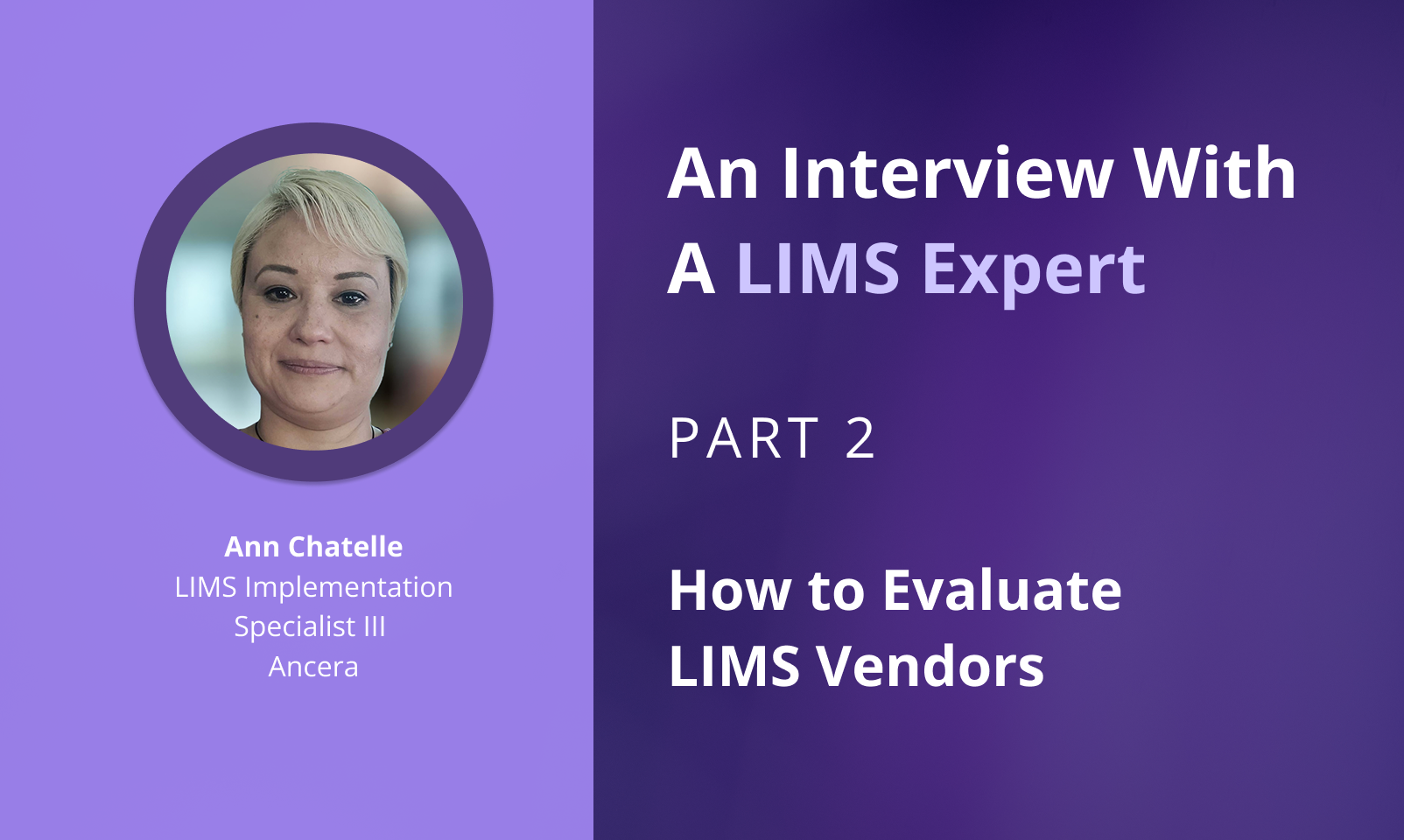
Select workflows are streamlined, dashboards look intuitive, and every feature seems designed to solve the challenges your lab faces today. But according to Labbit client, Ann Chatelle, LIMS Implementation Specialist III at Ancera, the questions that determine implementation success often aren't the ones being answered during the demo.
After evaluating multiple LIMS platforms and leading implementations from both the customer and vendor perspectives, Ann has learned that choosing a LIMS is about much more than comparing features. It's about understanding how the vendor will support your lab through implementation, growth, and years of operational change.
In Part 1 of this series, we explored the organizational realities behind successful implementations, from user adoption to rollout strategy. In Part 2, we turn our attention to the vendor evaluation process itself including what labs should be asking, what often gets overlooked, and why selecting the right implementation partner can quietly determine project success long before the system ever goes live.
Q: What questions should every lab ask during a vendor demonstration that almost nobody actually asks?
Ann: I think a lot of labs get distracted by the flashy demo and forget to ask the questions that matter after go-live.
I want to know how edits, corrections, reruns, and audit trails are handled because that's what happens in a real lab every day. I also want to understand what support actually looks like. Is it 8–5 support? Is emergency support available? What does it cost?
Licensing is another big one. How does the licensing model work today, and what happens as my lab grows? I've seen labs get surprised by costs later because they didn't fully understand the model.
I also want to know what I can configure myself versus what requires vendor involvement, how upgrades are handled, and what data migration actually looks like.
And finally, I always ask about the roadmap. How is future development prioritized, and how much influence do customers have on what gets built next? A LIMS is a long-term partnership, so those answers are often more important than the demo itself.
"A LIMS is a long-term partnership, so those answers are often more important than the demo itself."
Q: How do you evaluate a vendor's implementation team separately from their product? Does that gap matter?
Ann: The gap absolutely matters. A great platform can still struggle if the implementation team doesn't understand the type of lab they're building for.
One thing I've learned is that domain expertise matters. A team with molecular biology and NGS experience is usually going to build a better molecular solution than a team whose background is primarily environmental or chemistry labs.
I also pay attention to who is actually doing the implementation work, not just who is in the sales meetings. The best implementation teams ask a lot of questions, listen to the lab staff, and take the time to understand the workflow before proposing solutions.
One thing that always makes me nervous is when implementation teams change mid-project. By that point you've built rapport, transferred knowledge, and established trust. Changing key people can slow a project down and sometimes put it at risk.
"A great platform can still struggle if the implementation team doesn't understand the type of lab they're building for."
Q: How do you tell whether a vendor's promised implementation timeline is realistic?
Ann: After being involved in so many builds, validations, and regulated lab environments, I can usually tell pretty quickly whether a timeline is realistic or just a number designed to win the deal.
The biggest factors are workflow complexity, integrations, data migration, validation requirements, and how many labs or sites are involved. Those drive timelines much more than the software itself.
I also think many timelines assume the customer has unlimited time to dedicate to the project, which is rarely true. Lab staff still have day jobs, and testing and validation almost always take longer than expected.
Personally, I have a hard time getting behind an NGS implementation with less than a six-month timeline unless you're bringing up one workflow at a time. There are simply too many moving parts to do it properly.
A realistic timeline is based on building it, testing it, validating it, and getting users comfortable with it—not just configuring the software.
Q: You've evaluated multiple platforms yourself. What did that process teach you?
Ann: Going through the evaluation process taught me that demos and reality are very different. Always. Every vendor can make a workflow look great in a demo, but that's not how a real lab operates day to day.
I also learned there is no perfect LIMS. Every system has strengths and weaknesses. What matters is whether the platform is still being actively developed and whether the things you need can be improved over time.
Configurability ended up being much more important to me than flashy features. Labs change, workflows change, and if the system can't adapt without major development effort, that's going to become a problem.
The implementation team matters just as much as the software. If you don't click with the implementation team or trust their expertise, projects can become difficult very quickly.
I also put a lot of value on talking to labs doing similar work. A molecular lab should talk to other molecular labs. An environmental lab should talk to other environmental labs. Those conversations are usually more valuable than another demo.
And finally, I learned that a lab needs to understand its own processes before selecting software. It helps if your workflows are established and your SOPs are already written. If you don't know how you want the lab to operate, it's hard to know whether any LIMS is the right fit.
"Configurability ended up being much more important to me than flashy features. Labs change, workflows change, and if the system can't adapt without major development effort, that's going to become a problem.”
Q: How do you assess whether a vendor will still be the right partner five or ten years from now?
Ann: For me, one of the biggest questions is whether the platform is still being actively developed. Is this a mature product with a long-term plan, or is it approaching end of life? On the other side, if it's a newer platform, am I comfortable helping shape the product through feedback?
I also look at how often releases happen and how upgrades are handled. Do customers control when they take new releases, or are updates forced?
Customer influence on the roadmap is huge for me. I want to know if feedback actually matters and how quickly true bugs are addressed versus new features.
If the company has recently been acquired, I want to understand what that means for the future. Will the product continue to be invested in, or is it eventually going to be phased out?
Industry experience also matters. Vendors need to understand the type of lab they're supporting. If they don't, the burden falls back on the lab and the LIMS administrator to bridge that gap.
And finally, I look at whether the company itself is growing. Are they still investing in life sciences? Are they expanding into new markets? Or are they just maintaining what already exists?
Q: What does good post-go-live vendor support actually look like?
Good post-go-live support is huge for me because I spent years doing technical support myself.
The first thing I look at is responsiveness. Will support be available when most of my issues happen? What are the real response times, not just what's written in the SLA?
I also think relationships matter. A support team that knows your lab and understands your workflows can help you establish workarounds while waiting for bug fixes or enhancements. From my days in support, I can tell you that customers who provide good details, screenshots, and videos almost always get faster answers because support can spend time fixing the issue instead of asking questions.
I want support teams that actually troubleshoot problems, not just close tickets. And if there is bad news, just tell me. I spent too many years in the lab not to appreciate early communication so processes can be adjusted in the meantime.
Training and documentation are also a must. As a former trainer, I believe in teaching customers how to fish. The better I understand the platform, the better requests I can make and the more I can do myself.
User groups are valuable too. Sometimes another customer has already solved the exact problem you're facing.
I also want to know my escalation path and how support changes after the implementation team leaves. The support team should understand what was built and be able to support it efficiently long after go-live.
And honestly, I try to judge support before I sign the contract, not after.
"I try to judge support before I sign the contract, not after."
Conclusion
Across Ann's experience, one lesson stands out: evaluating a LIMS is really about evaluating a long-term partner.
Features matter, but they rarely determine whether a project succeeds. The implementation team, support organization, product roadmap, contract terms, and willingness to understand how your laboratory actually operates all have a lasting impact on the success of the system long after the sales process ends.
Labs often spend months comparing functionality and only a few hours evaluating the people they'll be working with for years. Ann believes that balance should probably be reversed.
In the final installment of this series, we'll explore what happens after implementation, how laboratories know when they've outgrown their current LIMS, the hidden costs of legacy systems, and the signs it's time to modernize before operational workarounds become permanent.