
solutions for lab it & informatics
Build A Future-Ready Lab Tech Foundation
Labbit gives IT and informatics teams the security, scalability, integration capabilities, and governance they need to support laboratory operations today while reducing technical debt and maintaining control as the organization grows.
Trusted By







Supporting Laboratory Growth Without Increasing IT Complexity
As laboratories grow, legacy systems can become increasingly difficult to maintain. Extensive customization, fragile integrations, and complex validation requirements create technical debt that slows innovation.
Labbit gives IT and informatics teams a secure, scalable foundation that integrates with enterprise systems, adapts through configuration, and supports controlled evolution of laboratory operations without increasing maintenance complexity.
Key Benefits for IT & Informatics
Minimize Technical Debt
Labbit helps IT teams avoid the maintenance burden of heavily customized LIMS. By managing workflows, business logic, and system behavior through configuration rather than custom code, laboratories can adapt to changing requirements without accumulating significant technical debt over time.
Connect Systems. Unify Data.
Labbit enables seamless data exchange across instruments and enterprise systems like ERP, QMS, and analytics platforms, reducing manual data movement, eliminating disconnected data silos, and improving visibility across laboratory operations.
Support Growth Without Replatforming
Whether expanding to new laboratories, manufacturing sites, or product lines, Labbit’s cloud-native architecture scales with your organization while its knowledge graph data model allows new workflows, relationships, and data structures to evolve without redesigning the system.
Simplify Validation & Change Governance
Version-controlled configurations, complete change histories, and isolated development environments make it easier to evaluate change impact, manage updates, and support a risk-based approach to software validation.
Strengthen Security & Access Governance
Enterprise-grade security, role-based access controls, single sign-on support, and database-level customer data isolation help IT meet organizational security requirements while maintaining ownership and control of laboratory data.
Consolidate Systems & Improve Visibility
Connect fragmented data sources through a unified laboratory platform that creates a single source of truth, improves cross-functional visibility, and supports trusted reporting across QA, QC, Operations, and Manufacturing.
SOLUTIONS FOr lab IT
Modernize Laboratory Infrastructure Without Increasing Complexity
IT teams need laboratory systems that can support growth, security requirements, compliance obligations, and evolving business needs without adding unnecessary operational burden. Labbit provides a modern platform that fits into enterprise technology environments while giving organizations greater control over data, system evolution, and long-term maintainability. With built-in governance, traceable system changes, and support for regulated workflows, Labbit helps organizations maintain control over validated systems as requirements evolve. By reducing reliance on custom development and disconnected applications, Labbit helps IT teams create a more sustainable laboratory technology foundation, one that supports innovation while minimizing complexity and compliance risk.
solutions for lab informatics
Enable Better Laboratory Operations Through Connected Data
Informatics teams need systems that align with how laboratories actually operate while providing the flexibility to support evolving scientific and business requirements. Labbit helps informatics teams bridge operations and technology by enabling more connected processes, trusted data, and adaptable workflows.
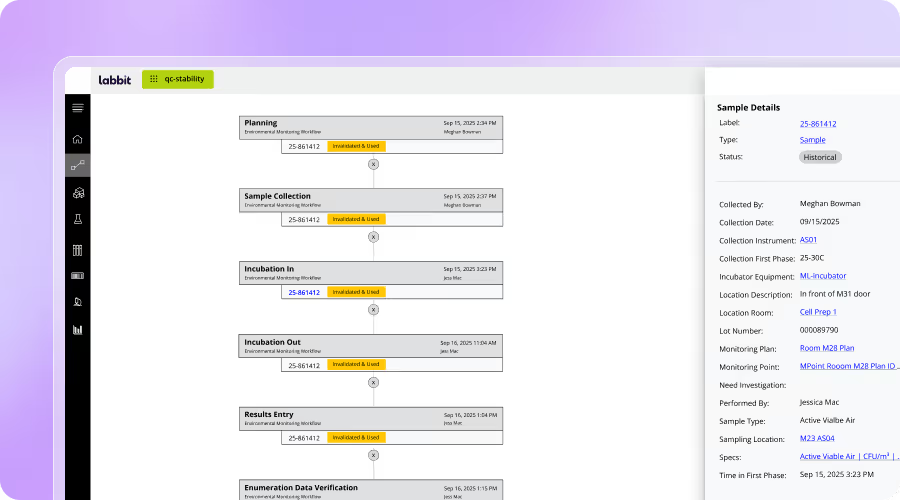
By bringing laboratory information together in context, Labbit helps teams improve visibility, reduce manual workarounds, and create a scalable foundation for automation, analytics, and future innovation.
Key Features for Lab IT & Informatics
Robust Integrations
Connect instruments and enterprise systems through flexible integrations that reduce custom development and simplify ongoing maintenance.
Version-Controlled Configuration Management
Track and manage configuration changes through controlled deployments, providing the visibility needed to assess impact and maintain validated systems.
No-Code Workflow Configuration
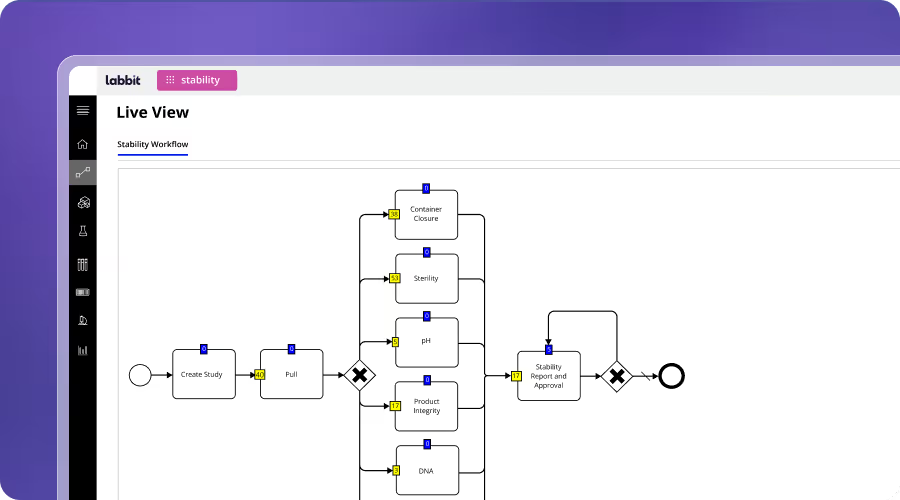
Enable laboratories to configure workflows through visual process modeling rather than software development, reducing dependence on IT for routine operational changes.
Enterprise Security & Identity Management
Maintain secure access control through role-based permissions, support for Single Sign-On (SSO), centralized identity providers, and enterprise authentication policies.
Development, Test, & Production Environments
Safely evaluate new configurations, validate changes, and test upgrades before deploying to production, helping reduce operational risk and simplify release management.
Knowledge Graph Architecture
Capture relationships between samples, batches, instruments, methods, workflows, and quality records—providing richer context for reporting, traceability, compliance, analytics, and AI initiatives.
REGULATORY COMPLIANCE + DATA SECURITY
Traceability and integrity by design
Labbit provides complete visibility across workflows with immutable audit trails and full traceability of every action and system change, helping teams maintain compliance with regulatory frameworks such as 21 CFR Part 11, EU Annex 11, and ALCOA+ data integrity principles. Built on secure, cloud-based infrastructure with role-based access controls and SOC 2 Type II accreditation, Labbit helps protect critical data while maintaining the integrity, transparency, and control required in highly regulated laboratory environments.

Getting Started
See how Labbit works for labs like yours
Book a 30-minute demo to see visual workflow modeling, real-time execution visibility, and knowledge graph insights in action. We'll show you how Labbit adapts to your specific workflows — without the vendor lock-in.