
LIMS SOLUTIONS FOR materials MANUFACTURING QC
Manage Complex Materials Quality Testing
From raw material verification to finished product release, materials manufacturers need quality processes that are accurate, repeatable, and fully traceable. Labbit provides a configurable LIMS that standardizes testing workflows, connects laboratory and production data, and gives quality teams complete visibility across every stage of materials quality control.
A LIMS Built for the Complexity of Materials Manufacturing QC
Materials manufacturers often rely on disconnected spreadsheets, paper records, legacy systems, and manual processes to manage testing, investigations, and batch release. As product complexity grows, these disconnected workflows make it harder to maintain traceability, prepare for customer audits, and provide production with real-time quality information. Labbit centralizes your QC operations in a configurable LIMS that reflects your SOPs, automates routine processes, and provides complete visibility across laboratory operations, production, and batch release.
Key Benefits for Materials Manufacturing Quality Control
Controlled Execution
Configure Labbit around your exact materials testing SOPs, specification rules, and review workflows to ensure every inspection and quality control process is executed consistently across products, sites, and production lines.
Real-Time Operational Visibility
Track testing progress, sample status, turnaround times, and release readiness in real time to identify bottlenecks, prioritize work, and keep production moving.
Always Audit Ready
Labbit automatically captures every result with its complete testing context in immutable audit trails, making it easy to demonstrate traceability, data integrity, and compliance during customer and industry audits.
Automated Data Capture
Connect laboratory instruments, testing equipment, ERP systems, and other business applications to eliminate manual data entry, reduce transcription errors, and accelerate quality control workflows.
Complete Traceability
Maintain complete traceability across every sample, material lot, test result, specification, instrument, analyst, and approval, allowing quality teams to quickly investigate nonconformances, support customer audits, and determine exactly what affected product quality.
One LIMS for All Labs & Sites
Standardize workflows and centralize data across physical testing, analytical, and quality control laboratories spanning multiple manufacturing sites, providing every team with a single source of truth for quality operations.
Solutions for Each Type of Materials Manufacturing
glass & ceramics MANUFACTURING
Connect Material Composition, Processing Conditions, and Quality Results
Ceramics and glass manufacturers must manage quality challenges driven by raw material variability, formulations, thermal processing, and microscopic defects. Labbit connects test results with manufacturing context — linking materials, batches, process conditions, methods, and specifications so quality teams can understand exactly how manufacturing conditions influence finished product performance.
With configurable workflows, instrument integration, electronic approvals, and complete audit trails, Labbit helps teams standardize testing processes while adapting to evolving materials, customer requirements, and quality standards such as ISO 9001, ISO/IEC 17025, and ASTM
polymers & Plastic materials manufacturing
Manage Evolving Formulations and Product Specifications
Polymer and plastics manufacturers must manage changing formulations, additive packages, processing conditions, and customer-specific performance requirements across diverse product lines. Labbit connects laboratory results with formulation, production, and specification data, helping teams quickly identify sources of variability, compare product performance across batches, and maintain consistency as products evolve.
With flexible specification management, automated data capture, and configurable workflows, Labbit helps manufacturers support multiple product families, changing customer requirements, and evolving quality standards without relying on costly custom development.
.png)
composites manufacturing
Track Every Material Layer, Process Step, and Performance Result
Composite materials require precise control over raw materials, layup processes, curing conditions, and qualification testing to consistently achieve demanding performance requirements. Labbit links quality results to every stage of production, giving teams complete visibility into the manufacturing history behind every finished component.
By connecting testing workflows, production records, and material histories, Labbit helps manufacturers reduce variability, accelerate investigations, demonstrate compliance with customer requirements, and confidently qualify high-performance composite products.

advanced & specialty materials manufacturing
Adapt Quality Workflows as Materials Innovation Accelerates
Advanced and specialty materials manufacturers continuously introduce new products, formulations, and testing methods while supporting demanding customer specifications and highly specialized manufacturing processes. Labbit provides the flexibility to configure laboratory workflows around evolving products without sacrificing standardization, consistency, or operational efficiency.
By preserving the relationships between material composition, process parameters, quality results, and finished product performance, Labbit gives quality teams the context needed to accelerate innovation while maintaining consistent manufacturing quality and complete audit readiness.
construction & Industrial materials manufacturing
Ensure Every Batch Meets Critical Performance Specifications
Construction and industrial materials manufacturers perform high-volume testing to verify every batch meets strict performance, durability, and customer specifications before products reach the field. Labbit connects laboratory testing with production data and quality specifications, allowing teams to verify compliance, investigate deviations, and maintain complete production histories for every material lot.
From incoming material inspection through final product release, configurable workflows, automated documentation, and standardized quality processes help manufacturers improve operational efficiency while demonstrating compliance during customer and certification audits.
Key features for Materials Manufacturing QC Labs
Configurable Workflows.
Configure lab workflows around your exact material testing processes, SOPs, and quality requirements. Support complex testing sequences, approvals, retesting, and exception handling across diverse materials, products, and manufacturing environments.
Specification & Method Management
Manage complex material specifications, test methods, acceptance criteria, and product variants for raw materials, formulations, and finished products to maintain consistent quality standards across grades, applications, and customer-specific requirements.
Batch & Lot Quality Management
Connect laboratory testing data to production batches and lots to monitor consistency, investigate deviations, and support confident release decisions while providing production with immediate visibility into batch quality. Link test results directly to manufacturing context to improve quality control and enable faster root-cause investigations.
Instrument & Software Integrations
Connect laboratory instruments, ERP, MES, and other business systems to automate data capture and synchronize quality information across manufacturing operations. Eliminate manual data entry, reduce transcription errors, and improve data integrity throughout the testing process.
End-to-End Traceability
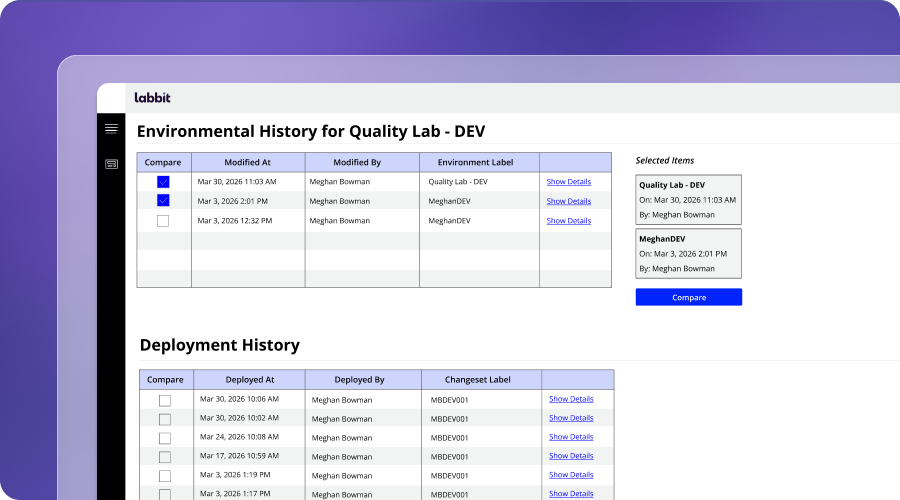
Maintain complete traceability across samples, materials, batches, specifications, test results, instruments, analysts, and approvals throughout the product lifecycle. Unlike traditional relational LIMS, Labbit's graph-native architecture preserves these relationships in immutable records, enabling faster investigations, richer context, and more efficient customer audits.
Automated COA Generation
Generate customer-specific Certificates of Analysis directly from approved laboratory results to reduce manual effort, eliminate reporting errors, and accelerate product release. Support multiple templates, specifications, and reporting requirements across products, grades, and customer applications.
CUSTOMER TESTIMONIAL
Grant Industries
“Labbit offered the ability to centralize data across our lab while automatically and immutably capturing every detail. Its flexible structure and comprehensive sample histories make audits and investigations far easier, while also freeing up our team to focus on growth and innovation.”
Paul Granatell
Executive Director of Quality
Grant Industries
Security & Regulatory Compliance
Labbit helps organizations protect sensitive laboratory data while maintaining the controls needed for quality-driven manufacturing environments. Secure cloud infrastructure, role-based access, immutable audit trails, electronic records, and controlled configuration changes support compliance with standards such as ASTM methods, ISO 9001, ISO/IEC 17025, and customer-specific quality systems.

Getting Started
See how Labbit works for labs like yours
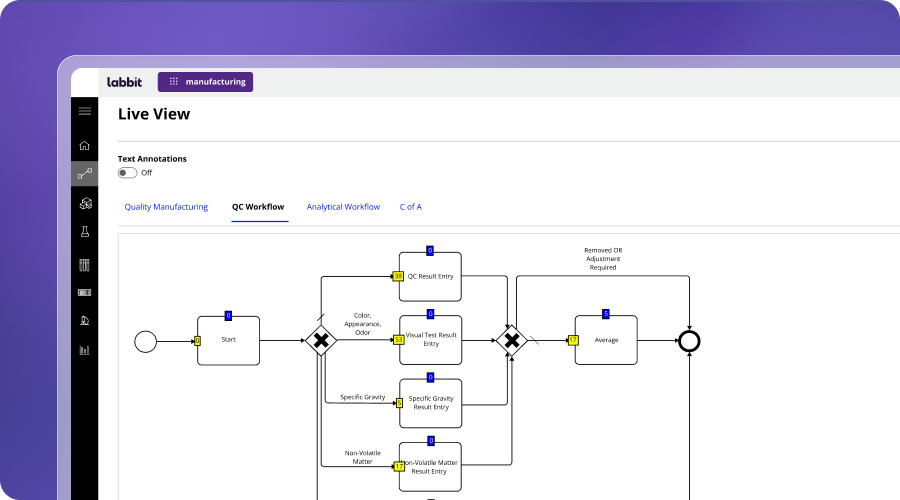
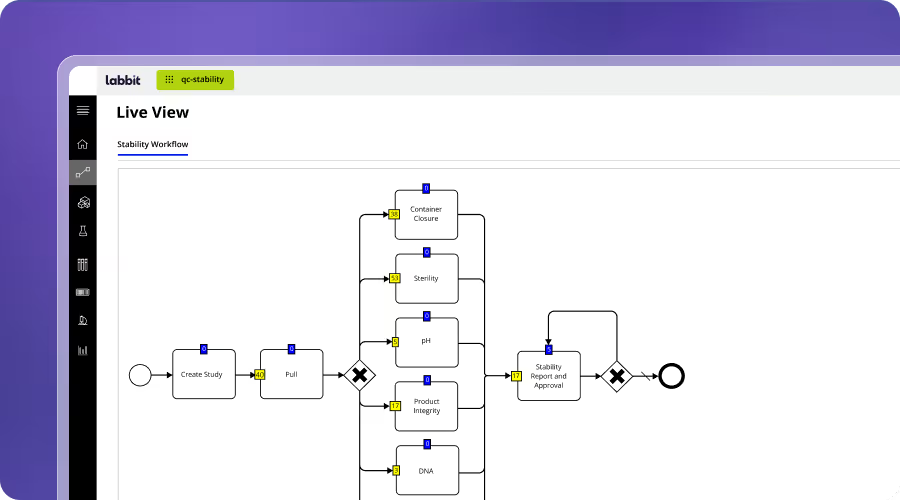
Book a 30-minute demo to see visual workflow modeling, real-time execution visibility, and knowledge graph insights in action. We'll show you how Labbit adapts to your specific workflows — without the vendor lock-in.
FAQ
Frequently Asked Questions
What should a LIMS provide for materials manufacturing quality control?
A LIMS should help laboratories standardize testing, improve sample traceability, automate data collection, support review and approval workflows, integrate with laboratory instruments and business systems, and provide complete visibility into testing and batch release activities. Labbit delivers these capabilities through configurable workflows designed around each laboratory's operating procedures.
How can a LIMS improve traceability in materials testing?
A modern LIMS records every step of the testing process, including sample movements, instrument data, analyst actions, approvals, and method versions. Labbit automatically maintains these relationships, making investigations and customer audits significantly faster.
Can a LIMS integrate with laboratory instruments and ERP systems?
Yes. Modern LIMS platforms should integrate with analytical instruments as well as enterprise systems like ERP software to eliminate duplicate data entry and synchronize quality information across the business. Labbit provides bi-directional integrations to help connect laboratory and manufacturing operations.
How does a LIMS help prepare for customer and quality audits?
A LIMS centralizes records, automatically captures audit trails, and makes supporting documentation readily available. Instead of manually assembling records from multiple systems, Labbit provides complete traceability and audit-ready documentation whenever it's needed.
Can one LIMS support multiple materials testing laboratories and manufacturing sites?
Yes. Many manufacturers operate analytical, chemistry, physical testing, and quality laboratories with different workflows and requirements. Labbit allows each laboratory to operate according to its own SOPs while consolidating data into a single platform for enterprise-wide visibility and standardized quality management.