ANALYTICAL QC LAB INFORMATICS

The Analytical QC LIMS for Trusted, Defensible Results

Labbit's knowledge graph-native LIMS connects every result to its complete context from method and instrument to analyst and supporting data while enforcing the workflows that ensure testing is performed consistently.

Why Analytical QC Needs a LIMS Built on Connected Data

Analytical QC labs are responsible for producing results that can be confidently trusted to support product quality, customer commitments, and business decisions. That requires more than simply recording analytical data. It requires understanding how every result was generated, what influenced it, and whether every step followed the approved process. Labbit's graph-native architecture connects methods, samples, instruments, analysts, workflows, and results as part of the data itself, giving teams immediate access to the complete, defensible story behind every result.

KEY BENEFITS

Complete Traceability by Design

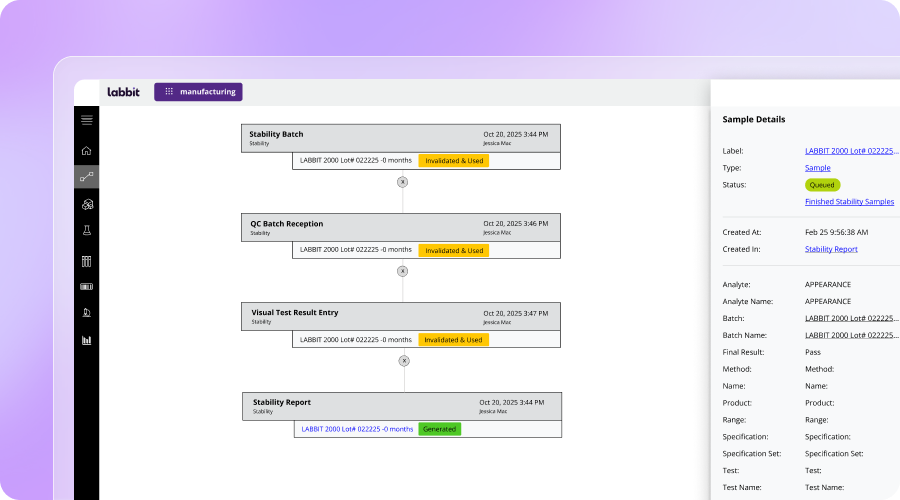
Every result remains connected to its method, sample, instrument, analyst, and supporting data, creating a complete, defensible history that supports confident quality decisions.

Automated Data Capture Across Instruments

Integrate with analytical instruments to automatically capture data, reducing manual transcription and preserving data accuracy from instrument output through final result.

Improved Review Efficiency

Give analysts and reviewers immediate access to the information needed to evaluate results, with review tasks managed directly in Labbit. Clear workflows ensure nothing is missed or delayed

Faster OOS/OOT Investigations

Out-of-specification and out-of-trend results stay connected to the context investigators need, cutting time spent reconstructing records across disconnected systems.

Faster Certificate Generation

Generate CoAs directly from approved results, shortening the time between final result approval and customer-ready documentation.

Controlled Change. Focused Revalidation.

Version method and workflow configurations with complete visibility into what changed, helping teams focus revalidation efforts only on impacted areas.

Specs and Methods, Always Current

Methods, specifications, and testing requirements are maintained in a single controlled system so every test runs against the current approved version. Every change is versioned automatically.

Configured to Reflect and Preserve Your Lab's Reality

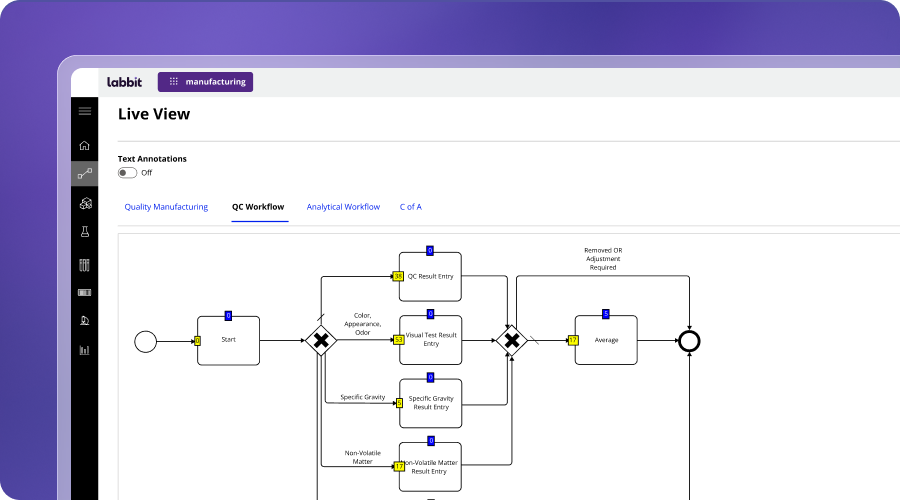
Labbit models your analytical workflows exactly as they operate, orchestrating work between testing, review, approval, and investigation while preserving relationships between results, methods, instruments, analysts, and supporting data.

Accelerate Review with Complete Context

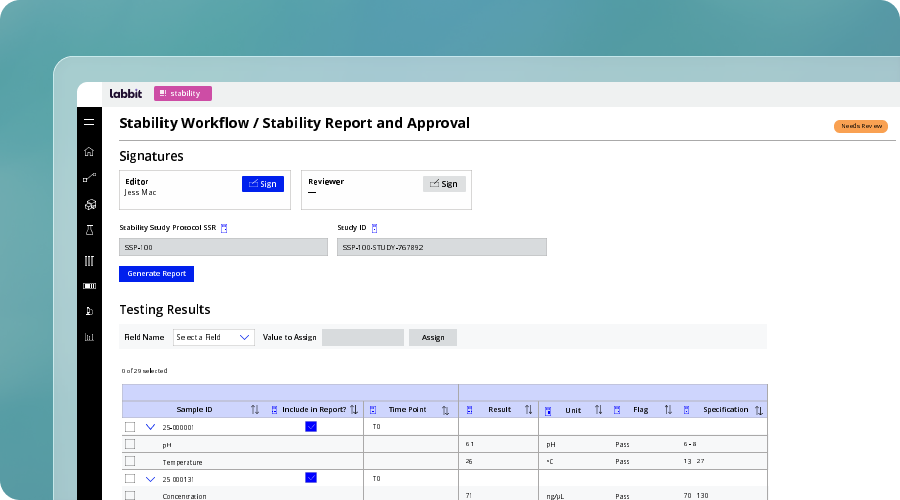
Because every result remains connected to its analytical context, reviewers can evaluate results with everything they need in one place. Reporting is gated until results are approved by the appropriate roles.

Root Cause, Without Reconstruction

Connect OOS/OOT results to the methods, instruments, materials, and historical data behind them so investigations begin with full context.

KEY CAPABILITIES

Master Data and Spec Governance

‍

Method and Workflow Configuration

‍

Instrument and Equipment Management

‍

Electronic Review and Signatures

‍

OOS/OOT Investigation

‍

Configuration Change Histories

‍

FAQ

Frequently Asked Questions

A few of the questions we hear most. If you have others, request a demo — we're easy to talk to.

What is analytical QC?
+
-

Analytical QC is the lab function responsible for testing materials, in-process samples, and finished products against defined specifications, covering sample intake, test assignment, results review, and investigation.

What is a LIMS, and how does it support analytical QC?
+
-

A LIMS is the software platform that manages a lab's samples, data, and workflows. Labbit is built to support the specific demands of analytical QC with the traceability and audit-readiness these labs require.

Can Labbit be configured to match our SOPs?
+
-

Yes. Labbit's workflows are configured to reflect your SOPs directly, rather than forcing your lab into a fixed template.

How does Labbit support audit readiness?
+
-

Every record is attributed to a user and timestamped at creation, with data captured immutably, so audit trails don't require manual reconstruction.

Can Labbit integrate with lab instruments?
+
-

Labbit is built with an API-first architecture to support integration with analytical QC instruments as well as ERP, MES, and QMS platforms.